Wedding Saree for Bride: Fabrics, Colours & Budget 2026
Share
The best wedding saree for a bride is usually a zari-woven silk, such as a Banarasi, Kanjeevaram or Paithani, in the colour her family tradition favours. Pick the weave first, then check that you can carry its weight through hours of rituals, confirm the silk is genuine, and keep lighter tissue, organza or georgette sarees for the other functions.
This guide is written for the bride and for whoever is shopping with her. It covers the ceremony saree weave by weave, the colours different communities often choose, the blouse and comfort questions that only show up on the day, what bridal sarees actually cost in the Greenways catalogue this month, how to check silk and zari, and how to store the saree once the wedding is over. If you would rather see the pieces first, our edit of wedding sarees for bride and the wider wedding saree collection are the places to start.
The bride's saree in one minute
If you only have time for the short version, these four decisions settle most of the choice:
- Weave: Banarasi and Kanjeevaram are the most common ceremony choices; Paithani is a strong option for Maharashtrian brides and anyone who loves its peacock and lotus pallus; tissue and organza suit a lighter, shimmering look.
- Colour: red and maroon remain common, but many families choose gold, green, pink, mustard or ivory with gold. Ask what your family expects before you fall in love with a shade.
- Weight and comfort: you will sit, stand and walk around the fire in this saree. A firm, heavy silk holds pleats well but feels heavier as the hours go by; try it on and walk in it before you buy.
- Budget: on Greenways in October 2026, sarees in the bridal sarees collection were listed from Rs 20,995 to Rs 76,995, while the full wedding collection started at Rs 2,995. Spend most of your budget on the ceremony saree.
Wedding saree for bride: choosing the ceremony weave
The ceremony saree is the one you are photographed in most, wear longest and are most likely to keep. That is why most brides choose a heavy silk with zari, the metallic thread woven into borders, pallus and motifs. Each weave behaves differently once it is on your body.
Banarasi (Katan and brocade)
Banarasi sarees come from Varanasi and are known for brocade work: dense floral and paisley motifs, heavy zari borders and an ornate pallu. Katan silk is the plain-woven pure silk base used for many traditional Banarasis, and it gives the saree its smooth, rich fall. A Katan Banarasi with brocade work is a classic choice for North Indian and Bengali brides. It drapes softly for its weight and holds pleats once pinned. If red is your colour, our guide to red Banarasi bridal looks shows how brides style it with different jewellery. Browse the full range of Banarasi sarees, which spans everyday to bridal pieces.
Kanjeevaram
Kanjeevaram (also written Kanjivaram) sarees come from Kanchipuram in Tamil Nadu. They are thicker and more structured than most Banarasis, with bold contrast borders and temple, checked or animal motifs in gold zari. That body is the reason they stay crisp through a long muhurtham, and also the reason they feel heavier. Tamil and many other South Indian brides choose Kanjeevaram for the main ritual. Our Kanjeevaram silk guide explains the weave in detail, and the Kanjeevaram sarees collection lists the current pieces.
Paithani
Paithani is the classic silk saree of Maharashtra, recognised by its richly coloured pallu, often with peacock, parrot or lotus motifs, and a zari border. Many Maharashtrian brides wear a Paithani, and it suits any bride who wants a silk with a statement pallu. Greenways has a Paithani collection if you want to compare pallu designs side by side.
Tissue and organza for a lighter bridal look
Tissue sarees are woven with metallic threads running through the silk, which gives them a sheer, glowing finish. Organza is crisp, translucent and light. Both are lighter than a traditional brocade or Kanjeevaram, so they work for a day-time ceremony in warm weather, a second ceremony look, or the reception. They crease more easily and show pin marks, so handle them gently. Read our tissue silk saree guide before you choose one as your main bridal piece, and see the organza collection for lighter options.
| Weave | Look | Feel and weight | Best for | Greenways collection |
|---|---|---|---|---|
| Banarasi (Katan silk, brocade) | Dense zari brocade, ornate pallu, soft sheen | Heavy but fluid; drapes softly | Main ceremony, especially North Indian and Bengali weddings | Banarasi sarees |
| Kanjeevaram | Contrast borders, temple and traditional motifs in gold zari | Thick and structured; among the heaviest options | Muhurtham and long rituals, South Indian weddings | Kanjeevaram sarees |
| Paithani | Statement peacock, parrot or lotus pallu, zari border | Medium weight | Maharashtrian weddings, brides who want a bold pallu | Paithani sarees |
| Tissue | Metallic shimmer, sheer glow | Light; creases easily | Day ceremonies, second look, reception | Wedding collection |
| Organza | Crisp, translucent, often embroidered | Very light | Reception, engagement, minimalist brides | Organza sarees |
Bridal colours and regional traditions
There is no single correct colour for a wedding saree for a bride. Red and maroon are the most familiar because many families link them with auspiciousness and marriage, but customs vary from community to community and from family to family. The table below describes what brides in different regions often choose. Treat it as a starting point for a conversation with your family, not a rule.
| Community or region (often) | Colours often chosen | Weave often chosen |
|---|---|---|
| North Indian Hindu weddings | Red, maroon, deep pink, with gold | Banarasi brocade, Katan silk |
| Bengali weddings | Red or pink; some brides choose off-white with red | Banarasi |
| Telugu weddings | Off-white or cream with a coloured border for the main ritual in many families; brighter silks for other ceremonies | Silk with zari border |
| Maharashtrian weddings | Green, yellow, purple, red | Paithani; some brides also wear a nauvari drape |
| Tamil weddings | Arakku red, maroon, mustard, green, peacock blue | Kanjeevaram |
Ivory and off-white with heavy gold zari are another choice some brides make, especially for reception looks and smaller ceremonies. Our breakdown of an ivory bridal saree look shows how gold zari, jewellery and a coloured blouse keep a pale saree clearly festive. In some communities a plain white saree without colour or zari is associated with mourning, so if you want ivory, make sure the zari, border or blouse carries colour and shine. To choose a shade that flatters you, see our guide to saree colours by skin tone.
Weight, comfort and the blouse
A bridal saree has to look right in photographs and stay comfortable through a long day. Plan for these:
- Walk in it before you buy. Heavy Kanjeevarams and brocades feel very different after a few hours than in a mirror. If you can, try the drape in a store and sit down in it.
- Pin in more than one place. Secure the pallu at the shoulder, the pleats at the waist and the pleats themselves, so the drape holds while you sit, stand and walk.
- Finish the saree early. Get the fall and pico done well before the wedding, so there is time to fix anything that looks uneven.
- Fit the blouse for movement. Rituals involve raising your arms, sitting cross-legged and bending. A lined blouse with a comfortable armhole lasts the day better than one that is only right for standing photos.
- Keep a small kit nearby. Safety pins, a stain pen and a spare brooch, carried by someone in the family, handle most small emergencies.
The blouse matters almost as much as the saree. Heavy silks pair well with a blouse cut from the saree's own blouse piece or a contrast silk with matching zari work; lighter tissue and organza sarees suit embroidered or sheer-sleeved blouses. Our saree blouse designs guide covers necklines, backs and sleeves, and our step-by-step saree draping guide walks through pleats and pallu styles.
One saree per function (quick reference)
Most brides wear something different at each function. The ceremony saree is the heirloom; the others should suit the setting. Haldi involves turmeric paste, mehendi means sitting still for a long time, and the sangeet usually means dancing, so lighter fabrics make sense there.
| Function | Fabric | Why |
|---|---|---|
| Haldi | Cotton, mul cotton or a light handloom in yellow or mustard | Breathable in daytime heat and easier to wash if turmeric stains it; you do not risk an heirloom |
| Mehendi | Georgette, chiffon or a light silk-cotton | Light and soft while you sit for hours; no heavy border pressing into your lap |
| Sangeet | Georgette or crepe with sequin, mirror or thread work; a pre-stitched saree if you are dancing | Moves with you and is less likely to come loose mid-dance |
| Ceremony (pheras, muhurtham) | Banarasi, Kanjeevaram, Paithani or Katan silk | Body and zari read as bridal and hold pleats through long rituals |
| Reception | Tissue, organza or a lighter Banarasi | Shimmer under evening lights and a clear change from the ceremony look |
Budget: what bridal sarees cost on Greenways (October 2026)
These are the ranges the Greenways catalogue listed on 19 October 2026. Prices and stock change, so check the live collection before you plan around a number.
| Collection | Products listed | Price range listed |
|---|---|---|
| Wedding | 176 | Rs 2,995 to Rs 92,995 |
| Bridal sarees | 8 | Rs 20,995 to Rs 76,995 |
| Banarasi sarees | 144 | Rs 2,995 to Rs 92,995 |
| Kanjeevaram | 38 | Rs 4,995 to Rs 59,995 |
| Wedding sarees edit | 2 | Rs 20,995 to Rs 25,995 |
The wide range within one collection reflects the difference between fabrics, weaving methods and how much zari a saree carries. Read each product description for the fabric before you compare prices: two sarees that look alike in photographs can be made quite differently. A sensible way to split a wedding wardrobe budget is to put the largest share into the ceremony saree and keep the haldi, mehendi and sangeet choices simpler.
How to check you're buying genuine silk and zari
A bridal saree is often the most expensive garment a family buys, so it is worth checking what you are paying for:
- Look for the Silk Mark label. Silk Mark is a quality label run by the Silk Mark Organisation of India to assure buyers that a product is made of pure natural silk. If a saree carries the label, you can check its number through the Silk Mark label verification service on the organisation's site. Not every genuine silk saree carries the label, so if one does not, ask the seller what fabric it is and get it written on the bill.
- Ask about the zari. Zari can be real silver or gold-coated, or a metallic or tested alternative. Each has a different look, weight and price, so ask which one the saree uses.
- Check the reverse. In a handwoven saree the back of the motifs shows floats and small irregularities; very regular, machine-perfect backs can indicate power-loom weaving. Neither is wrong, but the price should match.
- Be careful with home tests. The burn test is often suggested for silk, but it damages fabric and is hard to read on blended or treated yarns. Use it only on a loose thread, if at all.
Greenways says it sources sarees directly from master weavers. If you are unsure about a particular piece, ask the store team for the fabric details before you buy. Our guide to buying handloom sarees online covers more checks.
Buying before the wedding: timeline and returns
Leave time between buying the saree and the wedding. You will need the fall and pico done, the blouse stitched and fitted, perhaps a second fitting, and a trial drape with your jewellery. Rushing any of these steps is what causes last-minute trouble.
A few facts from Greenways' own policies help you plan:
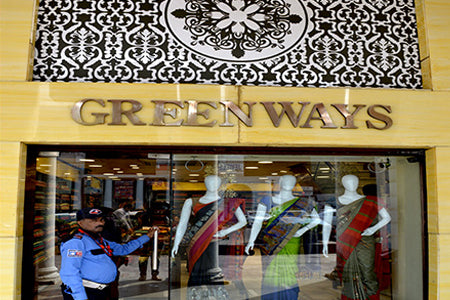
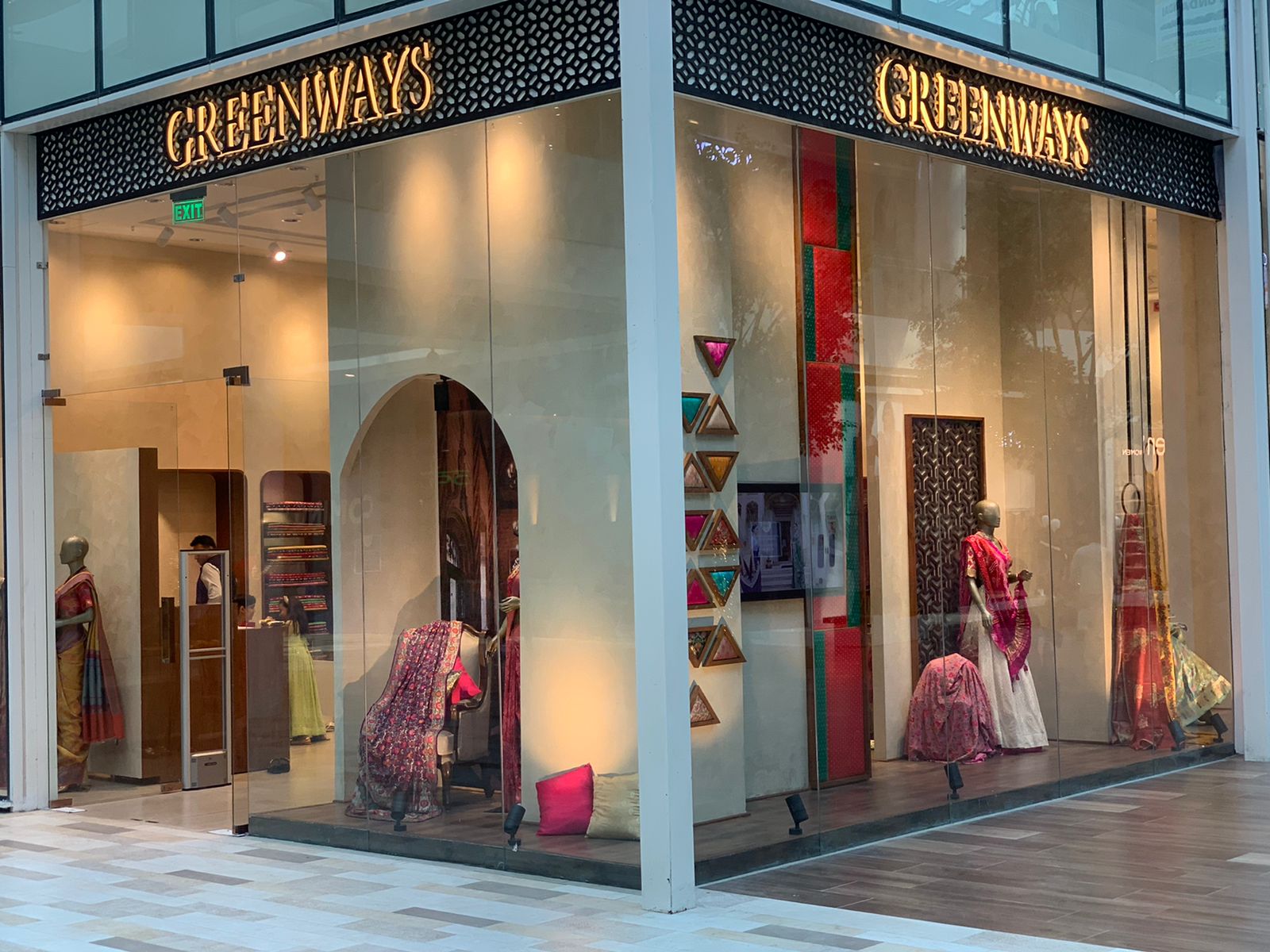
- Try it in person. Greenways has stores at Connaught Place and Pitampura in New Delhi, DLF Mall of India in Noida, DLF City Center in Gurugram, and Lulu Mall and Hazratganj in Lucknow. Seeing a heavy silk on your own body tells you more about weight and colour than any photograph.
- Returns window. Return requests must be made within 15 days of receiving the item by emailing info@greenways.co. The item has to be unworn and unused, with tags, in its original packaging and with proof of purchase. Sale items and custom or personalised items cannot be returned. Decide quickly, and do not get the saree altered until you are sure.
- Shipping and payment. Shipping is free on all orders within India, and cash on delivery is available up to Rs 10,000.
Greenways states that it began in 1942. In store, you can ask to see ceremony and reception options side by side.
After the wedding: caring for an heirloom saree
A bridal silk can last for generations if it is stored well. These general care habits apply to Banarasi, Kanjeevaram and Paithani alike:
- Dry clean only, and tell the cleaner about any stains, especially oil, turmeric or food, so they can be treated properly.
- Air it before storing. Let the saree air in the shade for a while after the wedding so moisture and perfume can fade.
- Wrap it in muslin or soft cotton, not plastic. Silk needs to breathe, and plastic can trap moisture.
- Refold it from time to time along different lines, so the zari does not crack along the same creases.
- Keep perfume and deodorant away from the zari, and spray them before you drape the saree, not after.
- Store it flat in a dry place, away from direct sunlight, which can fade colour over time.
Bridesmaids and guests
If you are not the bride, the guidance is simple: dress festively, but keep clear of the bride's look. Avoid heavy red, maroon and bridal-weight zari at the ceremony and reception. Pastels, jewel tones and lighter weaves in georgette, silk-cotton or light silk work well. Bridesmaids usually look best coordinated in a shared colour family rather than identical sarees, and one fabric weight lighter than the bride for each function. If you are buying a saree as a wedding present, our saree gifting guide can help you choose.
When you are ready, browse the bridal sarees and the full wedding collection online, or visit a Greenways store to try the drape before the big day.