Banarasi Saree Look: Styling Guide by Occasion
Share
A Banarasi saree look is built in layers: the weave (Katan, Kora, Georgette or Shattir) sets the formality, the blouse decides the century the saree reads as, and the jewellery pins the occasion. Get those three right and the same Banarasi can walk from an office meeting to a sangeet without feeling out of place. This guide reads a Banarasi weave the way a store owner reads it, then matches weight, colour and styling to the occasion you are actually dressing for, from a daytime puja to a reception.
Banaras Brocades and saris hold a Geographical Indication registered in 2009 to weaver associations in Uttar Pradesh, covering the handloom silk industry of the Varanasi region and the districts of Mirzapur, Chandauli, Bhadohi, Jaunpur and Azamgarh, as noted in the Wikipedia entry on the Banarasi sari. A saree from this region can take anywhere from fifteen days to six months to weave, which is why price, weight and sheen on a true handloom Banarasi are not negotiable. The rest of the market, art satin, Moroccan silk, crepe silk and the softer "art silk" grades, uses the same pallu grammar on lighter and cheaper bases, which is what most Indian buyers actually wear.
Banarasi saree look: four weaves, four weights, four moods
The same page lists the four main varieties of Banarasi saree: Katan (pure silk), Kora (organza with zari and silk), Georgette, and Shattir. Add the modern commercial family (art satin, Moroccan silk, crepe silk) and you have a complete map of what you will see when you shop. Weight sets the look before anything else, so start there.
| Weave | What it is | Weight and fall | Reads as |
|---|---|---|---|
| Katan (pure silk) | Pure mulberry silk warp and weft with real zari | Heavy, firm, holds pleats sharply | Bridal, first Karwa Chauth, formal daytime function |
| Kora (organza) | Organza base with silk and zari motifs | Crisp, light, stands away from the body | Reception, cocktail, evening event with photographs |
| Georgette Banarasi | Georgette base with woven zari butis | Light, fluid, drapes close to the body | Long evenings, sangeet, Karwa Chauth fast |
| Shattir | Soft silk-blend base; contemporary designs | Medium weight, soft drape | Festive family days, puja followed by lunch |
| Satin or art satin Banarasi | Satin-weave base with zari motifs | Smooth sheen, medium weight | Engagement, cocktail hour, office party |
| Moroccan silk Banarasi | Textured mill fabric with woven zari | Soft, matte-glossy mix, medium weight | Festive office day, daytime function |
| Crepe silk Banarasi | Crepe base with woven zari motifs | Soft, wrinkle-resistant, flat sheen | Office, commute, puja after work |
If you are not sure how to tell a handloom Katan Banarasi from a power-loom lookalike, read our explainer on pure vs artificial silk saree, and compare with Kanjivaram vs Banarasi if you are also considering a South Indian silk for the same occasion.
How to read a Banarasi weave before you style it
Three things tell you what you have in your hand. The first is the motif. Classic Banarasi motifs are mughal paisleys (kalga and bel), the jhallar edging on the pallu, floral butis, and the leaf-and-vine jaal across the body. A real handloom piece carries these cleanly on both sides, with small irregularities that a machine cannot fake.
The second is the zari. As the Wikipedia entry on zari explains, zari is "an even thread traditionally made of fine gold or silver," wound around a silk core. Modern commercial sarees almost always use silver-electroplated copper or metallised polyester film, which is lighter and cheaper. Hold the pallu to light: real gold or silver zari glows warm and has subtle variation in colour; polyester metallic zari reads flat and uniform.
The third is the back of the pallu. A kadhwa (hand-woven motif) Banarasi has clean, trimmed ends on the reverse, each motif cut by hand. A cutwork (power-loom) Banarasi has long floats of zari on the back that have been clipped in a single pass. Both are legitimate products; only the first is a handloom piece at a handloom price.
Banarasi saree look by occasion: a quick match table
Different occasions reward different weights and sheens. The table below is a starting point, not a rule. Family custom and your own comfort matter more than any guide. Prices are as listed at the time of writing and may change; confirm on the product page before you order, and keep the refund policy in mind when you buy.
| Occasion | Best weave weight | Blouse style | Jewellery weight |
|---|---|---|---|
| Office or daytime meeting | Crepe silk or light art satin | High-neck, elbow sleeves | Studs, thin bangles |
| Puja at home or temple | Georgette or Shattir | Round neck, three-quarter sleeves | Jhumkas, red bangles, bindi |
| Haldi or mehendi | Light crepe or organza in yellow / green | Short-sleeve, boat neck | Fresh flower gajra, light gold |
| Engagement | Satin or Katan silk | Embroidered, deep back | Choker, statement earrings |
| Sangeet | Georgette or Moroccan silk | Backless or halter | Hathphool, chandbalis |
| Wedding guest | Art satin or Moroccan silk Banarasi | Elbow sleeve, scoop neck | One statement piece |
| Reception or cocktail | Satin or organza Banarasi | Corseted, bustier, sheer yoke | Polki or cocktail rings |
| Bride herself | Katan Banarasi in red / maroon | Heavily embroidered, full sleeves | Full bridal set |
Situation-based Banarasi saree ideas from the Greenways range
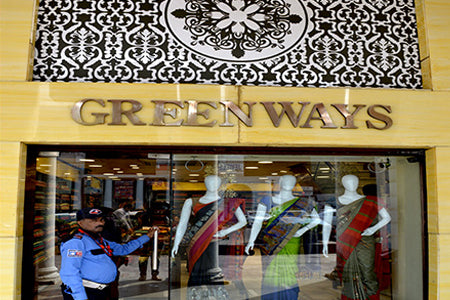
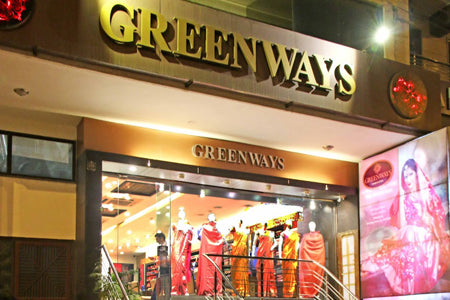
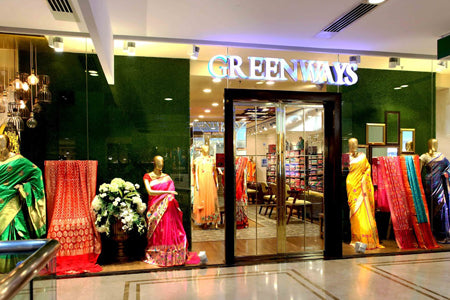
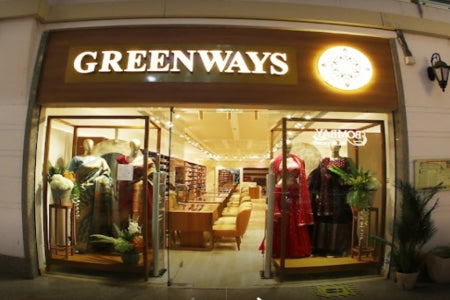
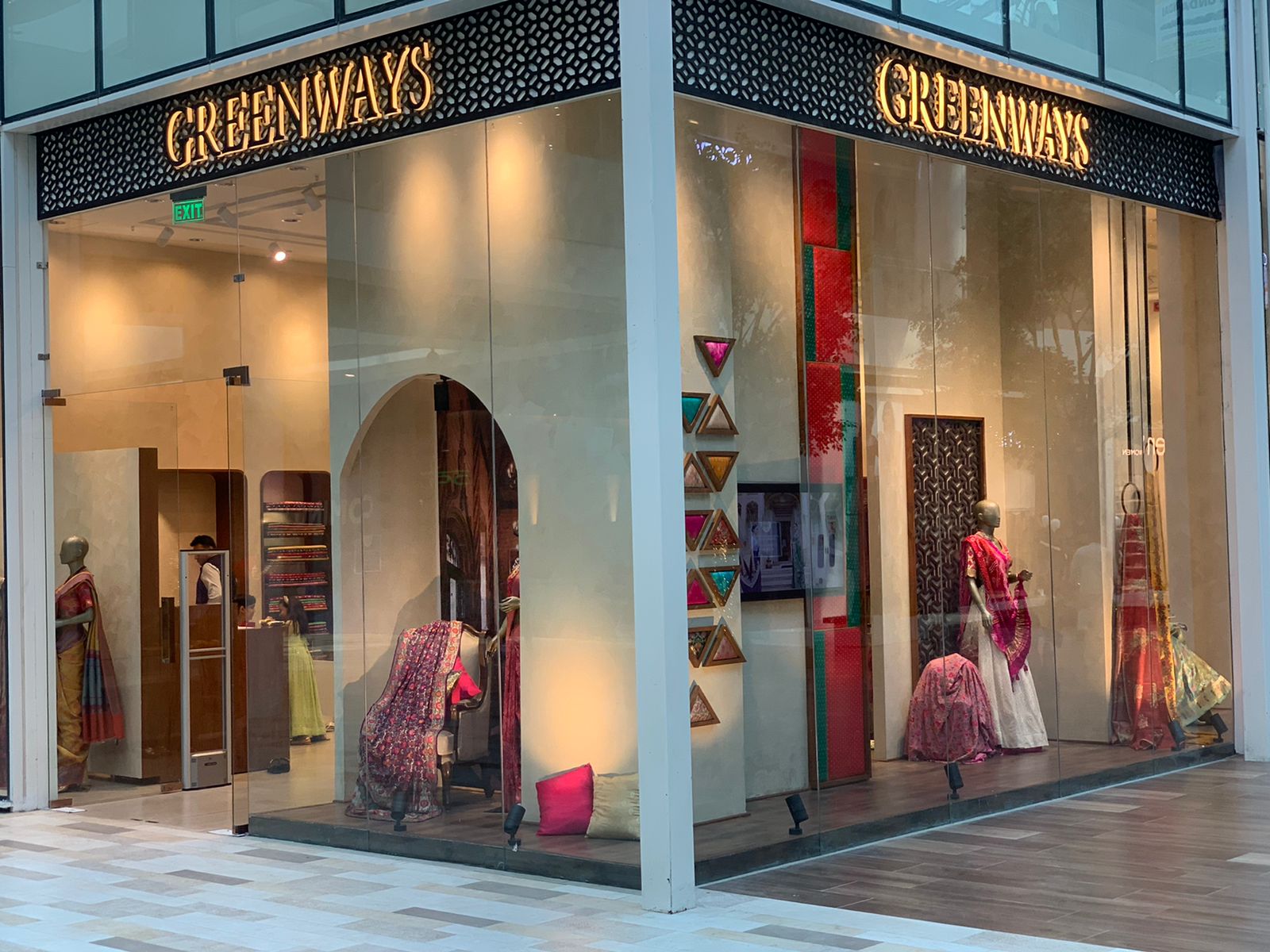
The Greenways store in Delhi carries Banarasi sarees across all the weaves above. The picks below are current in-stock pieces grouped by where you would actually wear them. Treat them as a starting point to try on in the store or compare online.
For an office day with a festive mood
Crepe silk is the kindest Banarasi for a commute and a desk. It stays smooth after an auto ride, a chair and a laptop bag, then dresses up with heavier earrings. The Red Crepe Silk Banarasi Saree at Rs 4,995 is one of the most affordable red Banarasi pieces in the store; the Yellow Crepe Silk Banarasi Saree at Rs 4,995 and the Blue Crepe Silk Banarasi Saree at Rs 7,995 are everyday-festive without pushing into evening-wear territory.
For a daytime puja or a first family function
A georgette Banarasi drapes closer to the body and holds its shape across a long afternoon puja. The Red Georgette Banarasi Saree at Rs 11,995 is the classic choice for a first puja or Karwa Chauth, and the Pink Georgette Banarasi Saree at Rs 11,995 is the softer alternative when the family would rather you did not wear bridal red. For reading colour by complexion before you pick, see our best saree colours by skin tone guide.
For haldi or mehendi
Yellow, mustard, lime and leaf greens carry the haldi mood, and lighter Moroccan silk Banarasi pieces sit well in daylight photographs. Consider the Green Moroccan Silk Banarasi Saree at Rs 7,995 or the Mehendi Green Moroccan Silk Banarasi Saree at Rs 7,995 for the mehendi ceremony, and the Orange Art Satin Banarasi Saree at Rs 7,995 for the haldi. Keep accessories light; fresh flowers do most of the work.
For an engagement or a sangeet
Satin Banarasi has a heavier sheen and photographs well in indoor venue light. The Pink Satin Banarasi Saree at Rs 20,995 is a dressier option for a bride-to-be at her own engagement, and the Purple Satin Banarasi Saree at Rs 25,995 reads richer in artificial light, which is where most sangeets happen. For a sister or close friend of the bride, the Wine Crepe Silk Banarasi Saree at Rs 7,995 keeps the dark-berry palette without competing with the bride.
For a cocktail evening or reception
Here darker colours and a slight edge work. The Black Moroccan Silk Banarasi Saree at Rs 7,995 is the piece to reach for when the dress code tilts cocktail. A corseted or bustier blouse, strong eye make-up, and a single statement earring finish the look. For a dressier daytime-into-evening reception, the Cream Crepe Silk Banarasi Saree at Rs 14,995 reads refined without stealing attention.
If you would rather browse by colour or weave, start with the full Banarasi collection, the organza sarees for a crisper evening piece, or the engagement sarees edit when the occasion is a formal function. For colour-first shopping, the red and pink collections carry most Banarasi weights.
Blouse choices that modernise a Banarasi saree look
The blouse is the single easiest way to shift a Banarasi from its grandmother-wardrobe reading to something that works on a 25-year-old at a cocktail party. Three directions do most of the work.
The contrast solid. A plain velvet, raw silk or satin blouse in a contrast colour, teal with a red Banarasi, mustard with a wine piece, or ivory with a jewel tone, lets the saree speak while the blouse holds structure. This is the pairing you see most often on brides in editorial shoots.
The embroidered yoke. A plain blouse with a hand-embroidered yoke in zardozi, pearls or sequin adds weight only where the camera sees it, and it photographs richer than the whole saree alone. Good for engagements and sangeets.
The modern cut. A corseted, boat-neck, halter or deep-back blouse reads immediately contemporary against the classical Banarasi weave. The tension is the point. For cut-by-cut ideas, our Banarasi saree blouse design guide breaks down necklines, sleeves and backs. For an evening organza look, the organza saree blouse designs piece is the closest cousin.
Jewellery, drape and footwear notes
Jewellery. Kundan and polki sit most naturally with Banarasi gold zari; pearls and uncut diamonds read dressier and younger. Keep weights consistent, so a heavy choker does not sit next to heavy jhumkas. Many families stack red and green bangles for married women during a wedding function.
Drape. The classical nivi drape (pleats in front, pallu over the left shoulder) photographs cleanly. For a reception, a seedha pallu (from the right shoulder, across the front) shows more of the saree body. Our step-by-step draping guide walks through both.
Footwear and balance. A Katan Banarasi looks best with closed, metallic flats or low heels; a tall heel is uncomfortable under heavy silk. Organza Banarasis carry a stiletto easily. If the pallu is heavily zari-worked, keep the blouse plain; if the blouse is embroidered, let the pallu rest with a light, pre-pinned drape.
Care note after the event
Dry-clean the first wash, always. After that, store the Banarasi folded in soft muslin, refold along fresh lines each month so creases do not permanently sit on the zari, and keep away from naphthalene, which can tarnish real zari. Iron on the reverse at a medium setting with a cotton press cloth. Never spray perfume directly on a Banarasi; alcohol marks the zari.
For a celebrity reference and a bridal-colour deep dive, see our Alia Bhatt wedding saree look, red Banarasi saree looks and pink saree guide. For guest styling, the wedding guest saree ideas guide covers how to not over-dress.
Frequently asked questions
What makes a saree an actual Banarasi?
A Banarasi is woven in the Varanasi region of Uttar Pradesh. Six districts, Varanasi, Mirzapur, Chandauli, Bhadohi, Jaunpur and Azamgarh, hold a Geographical Indication registered in 2009 for Banaras Brocades and saris, as noted in the Wikipedia entry on the Banarasi sari. The four main varieties are Katan (pure silk), Kora (organza with zari and silk), Georgette and Shattir. A piece woven elsewhere in the same style is not a GI Banarasi.
How long does it take to weave a real Banarasi saree?
The same Wikipedia entry notes that a Banarasi saree can take from fifteen days to a month, and sometimes up to six months, to complete. The exact time depends on the motif density, whether the pallu is kadhwa (each motif woven in by hand) or cutwork, and how many weavers work the loom.
What is the best Banarasi saree weight for a wedding guest?
Medium-weight art satin, Moroccan silk or a softer Katan Banarasi are the easiest to wear through a long function. Katan is dressier but heavy; georgette is lighter but reads less bridal. Avoid very heavy pure-silk pieces unless you are the bride, so you do not outshine the host.
Can a Banarasi saree be worn to office?
Yes, and crepe silk and lighter Moroccan silk Banarasi sarees are made for that use. Keep the blouse high-necked with elbow sleeves, pair with small studs and a single bangle stack, and the same saree re-styles into an evening look after work with heavier earrings and darker lipstick.
What colour Banarasi saree is best for an engagement?
Pink, rose, deep red, maroon and wine are the most common engagement choices, with a satin or Katan weave for the extra sheen. Cream and ivory with heavy gold zari are the daytime alternatives. Avoid bridal blood-red if your wedding outfit will be red, so you do not repeat the exact same look at two functions.
Is a Banarasi saree always made with real gold zari?
No. As the Wikipedia entry on zari explains, zari is traditionally made of fine gold or silver wound on a silk core, but most modern commercial Banarasi sarees use silver-electroplated copper or metallised polyester film instead, which is lighter and cheaper. Real gold or silver zari is one reason heritage Katan pieces cost many times more than commercial Banarasi sarees.